Even after buying the Jaco signature, I took the Dame Jazz Special on stage for this song.
Skill is not made by a good instrument. It is made by how many times you take it out.
Play the same song, and each instrument feels different. The texture of the sound is part of it, but the touch of every spot where your hands meet the instrument is different too.
A bass that has settled into your hands is like a sofa that holds you just right. Playing becomes truly comfortable. Put on a drum machine, and you keep going until it is hard to stop.
An instrument with great specs that you do not love ends up staying in its case. On the other hand, holding one that looks like what your favorite player used makes you feel like that person. That satisfaction is what makes you take it out one more time.
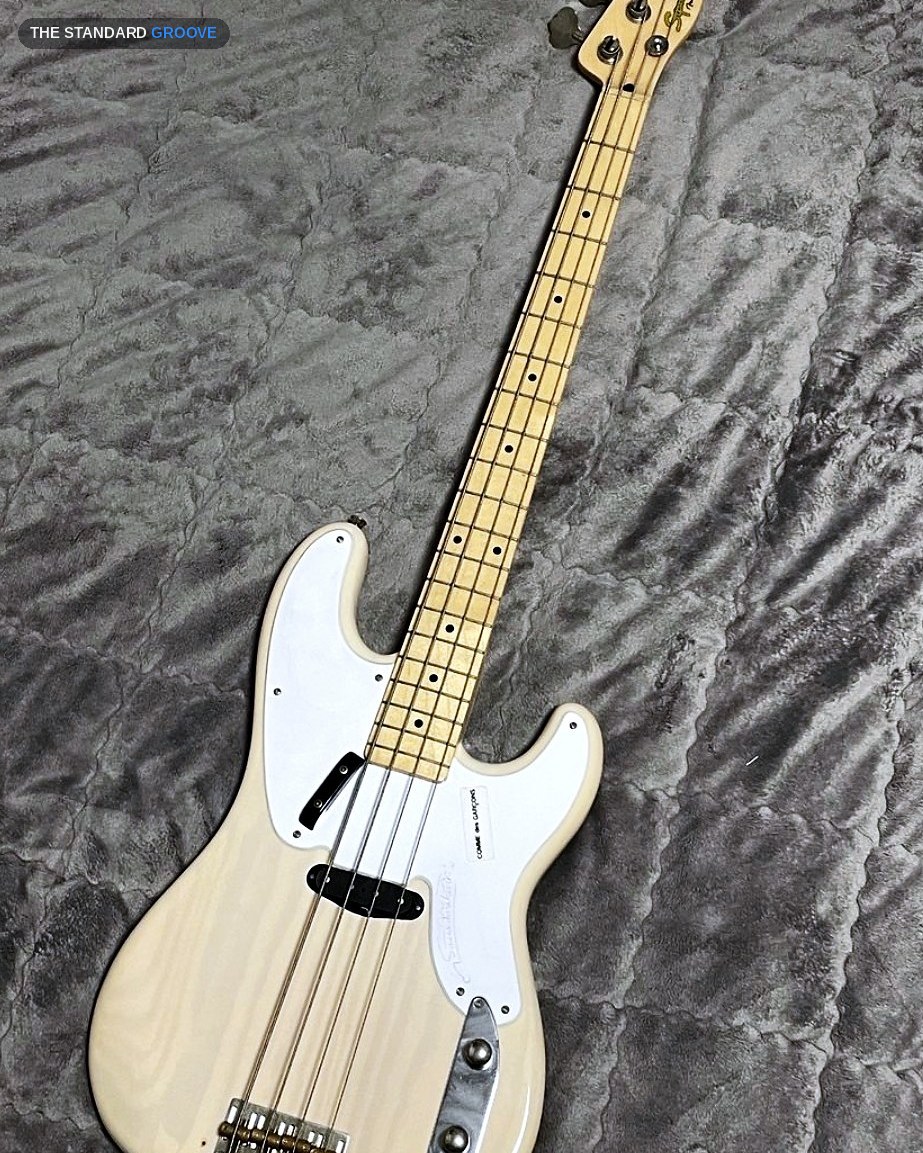
Two Basses That Are Always Out
The two basses I reach for most right now are a Fender Custom Shop '64 and a Mexican Jazz Road Worn '60 in Fiesta Red.
Both are always out. The Custom Shop '64 has no fixed spot; it moves around the house.
I keep a stand in every room: next to the living room sofa, next to the bed, next to the computer in my work room, and in the room where I keep my instruments. Wherever I go, the bass comes with me.
I think the fewer steps it takes to start playing, the better. That is why my basses are always out.
I play while watching YouTube, once when I wake up, once before bed, and even lying down. The way you flick through YouTube Shorts, I pick up the bass whenever I have a moment.
The Road Worn '60 is the bass I keep in my studio. When I record a simple demo, this is the one I pick up.
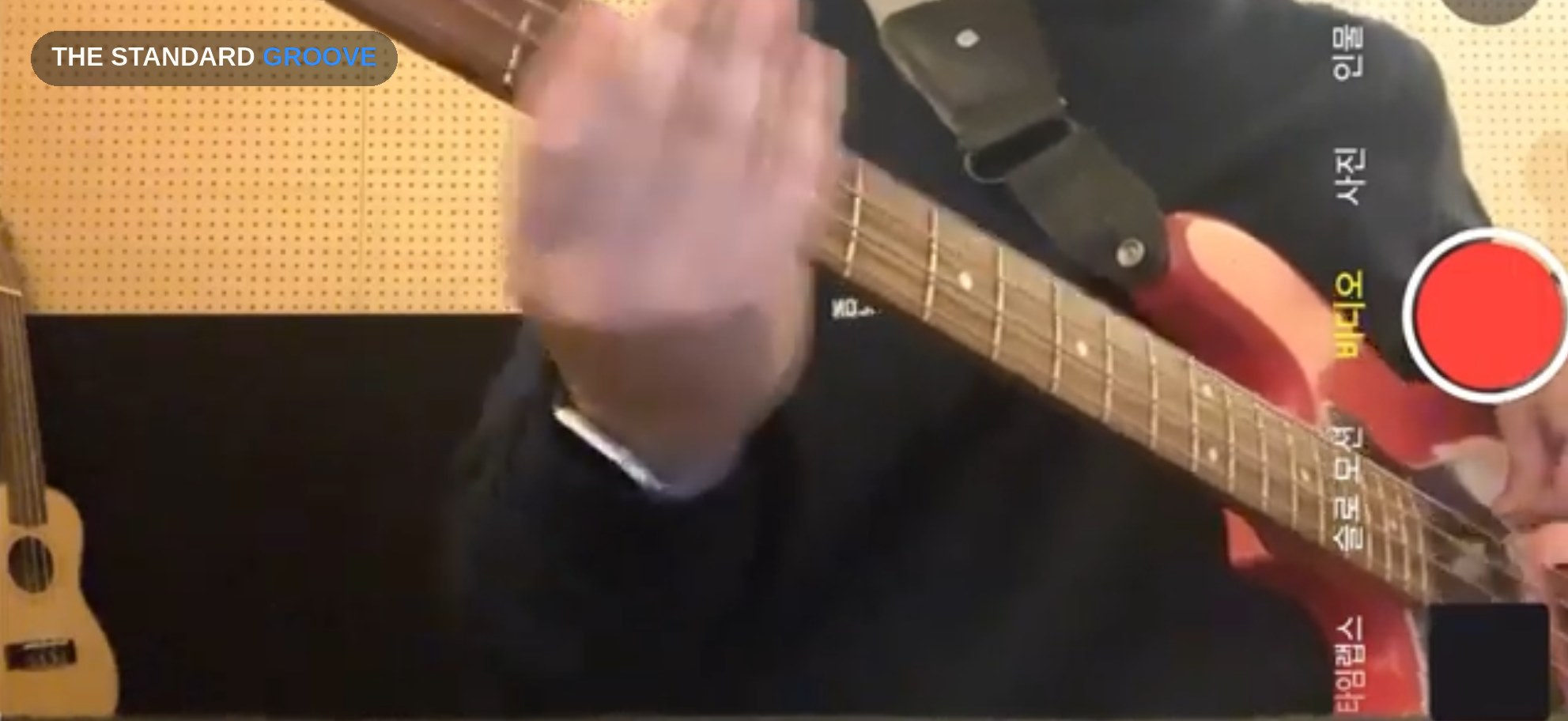
I bought it not because it was different from the '64, but because it was similar. It recreates the 1960s neck of the '63 Original my teacher passed down to me and of the Custom Shop '64, so it settled into my hands easily.
The sound is different, but it gives a similar feel in the hands for less than half the price. I think it may be the best value in Fender's lineup.
I use it in lessons too. My students tend to prefer the Fender USA Standard Jazz I keep for lessons, but many like the Road Worn better. So do I.
I usually keep playing the bass that has settled into my hands.
What It Means to Fit Your Hands
Anyone who plays an instrument knows this phrase: this one fits my hands.
Neck feel, weight, sound, body size. It is a matter of sense that is hard to put into numbers. Even when two instruments have the same neck shape and the same radius on paper, each one feels different.
The '63 Original, the Custom Shop '64 and the Road Worn '60 are the same. All three have a 7.25-inch fingerboard radius and a 38.1 mm nut width, and the neck is about 20 mm thick at the first fret on each. The difference is less than a millimeter.
Yet each of the three feels different in the hand.
Think of Apple's genuine accessories. Plenty of products do the same job, but the texture of holding and using them is different. People sum it up in a single word: feel.
A bass that fits your hands is the same. It is a feel that no spec sheet lists.
Even without plugging into an amp, the resonance of the neck and body travels into your hands. In that resonance you feel the instrument's texture. String tension, whether the finish is urethane or lacquer, and whether the back of the neck is coated all change that texture a lot.
Strangely, it is hard to say how long it takes for a bass to settle into your hands.
A bass that does not fit never fits no matter how much you play it, and a bass that fits feels like yours the first time you pick it up.
In the second chronicle (Ep.02), I brought up Mr. Ollivander's words: maybe it is not the player who chooses the instrument, but the instrument that chooses the player.
Every time I meet a bass that fits my hands, those words ring truer.
Basses Left in the Case
So many good instruments go into their cases and never come out.
My Ken Smith was like that. A neck-through, 35-inch-scale five-string, and its neck felt wonderful. The body was thin and small, yet it was heavy enough that you could feel the density of the wood when you lifted it, and the fingerboard was very hard.
When I was doing TV shows, I loved it because the headstock looked beautiful on camera.
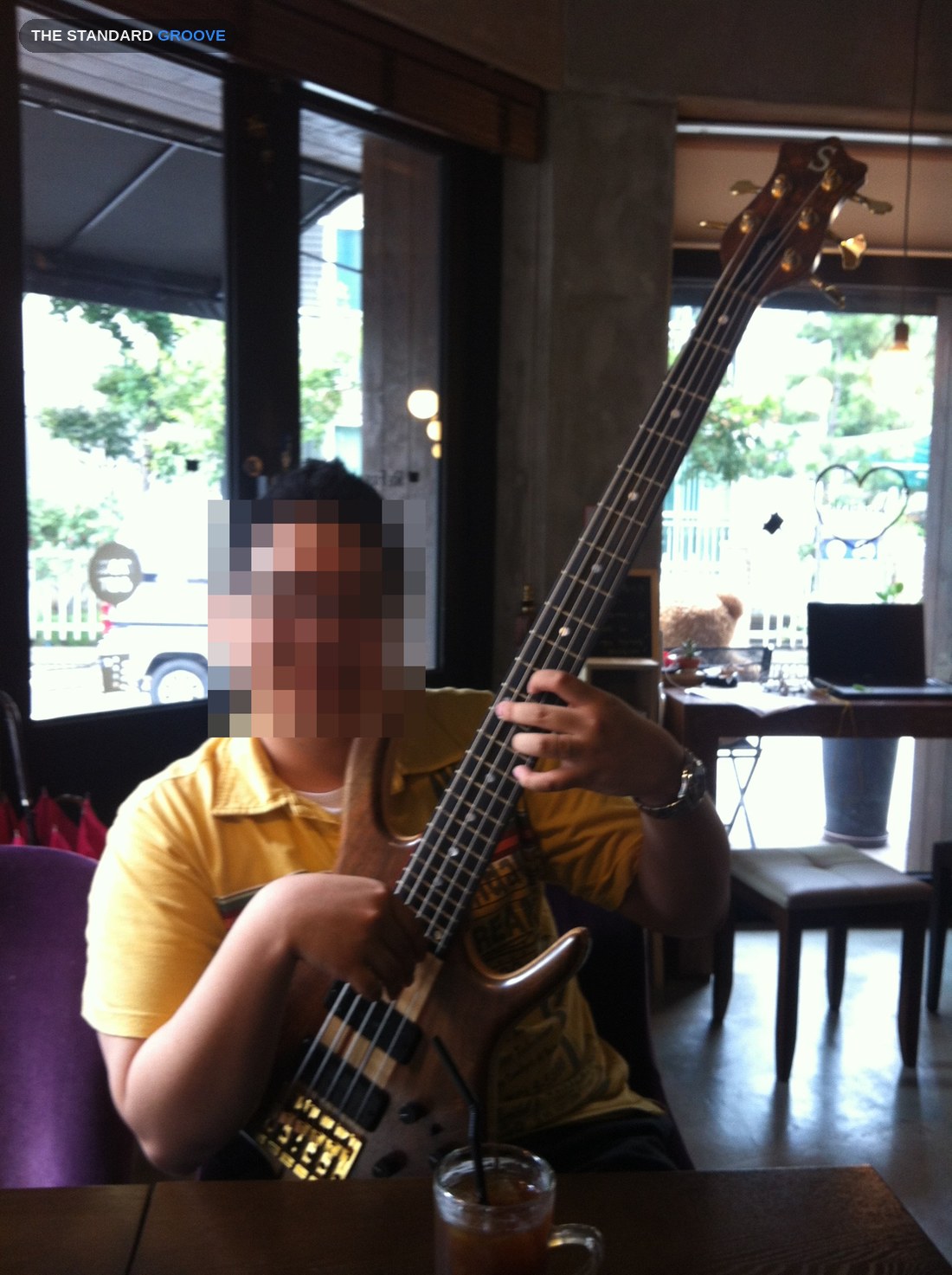
But the fingerboard radius was so flat that it was hard to play.
Once I started carrying the Custom Shop '64, the Ken Smith stayed in its bag and never came out once until I sold it.
I had no regrets when I sold it. It felt like handing an expensive jacket that never fit me to a friend it would fit perfectly. If anything, it was good.
It was a truly great instrument. It just did not fit me.
I once switched from a Fender Jazz Deluxe Z2 in Teal Green to a Jaco Pastorius signature. I had been advised that a passive bass would suit me better than an active one, and that was the best option I could bring home by letting the Teal Green go.
I liked the Teal Green far more. I had not switched because I wanted to. So I rarely reached for it.
Around then, Seoul Jazz Academy held its regular concert. It was the stage where I played "Simple Life," this episode's One Song.
I practiced with the new Jaco signature, but for reasons I still cannot pin down, it just would not settle into my hands, and it was hard. I think it was probably the urethane finish on the body. Yet the Dame Jazz Special had the same urethane finish, and it felt different.
In the end, I took the Dame on stage. The Dame suited me better.
I soon traded the Jaco signature for a Music Man, and tried a Yamaha too. That is how my instrument journey began.
Both were good instruments, but they did not fit me. The Music Man's neck texture never settled into my hands, and the pickup position felt awkward. The Yamaha had such a strong, distinctly Yamaha sound that I simply could not slap on it.
Looking at the Playing, or at the Instrument
Buying an expensive instrument from the start is good. Your first car does not have to be a used compact.
I think the better it is, the better.
But I have often seen people who start with an expensive instrument focus on specs like wood and brand, more than on feel or sound.
That is not wrong. The instrument itself may simply be good. And when you bring home a new instrument, curiosity about it can make you practice far more. I see that as a positive thing. I was like that too.
I went on a lot of instrument journeys. When I buy a new bass, it is pretty, it is fascinating, it is fun, and for weeks I stay up all night playing with it.
Then, before I know it, the parts I could not play, the parts that confused me, and the spots where my hands hesitated have all come loose.
But you need to be able to ask yourself whether you are looking at the playing, or at the instrument itself.
So I tell my students not to let specs give them preconceptions. Unusual woods are usually expensive. But I do not think an unusual wood is the same thing as a good wood.
Tone comes above all from your hands making the right sound; specs matter less than you think. What you should look at is the texture where your hands meet the instrument.
The Bass That Looks Best to You
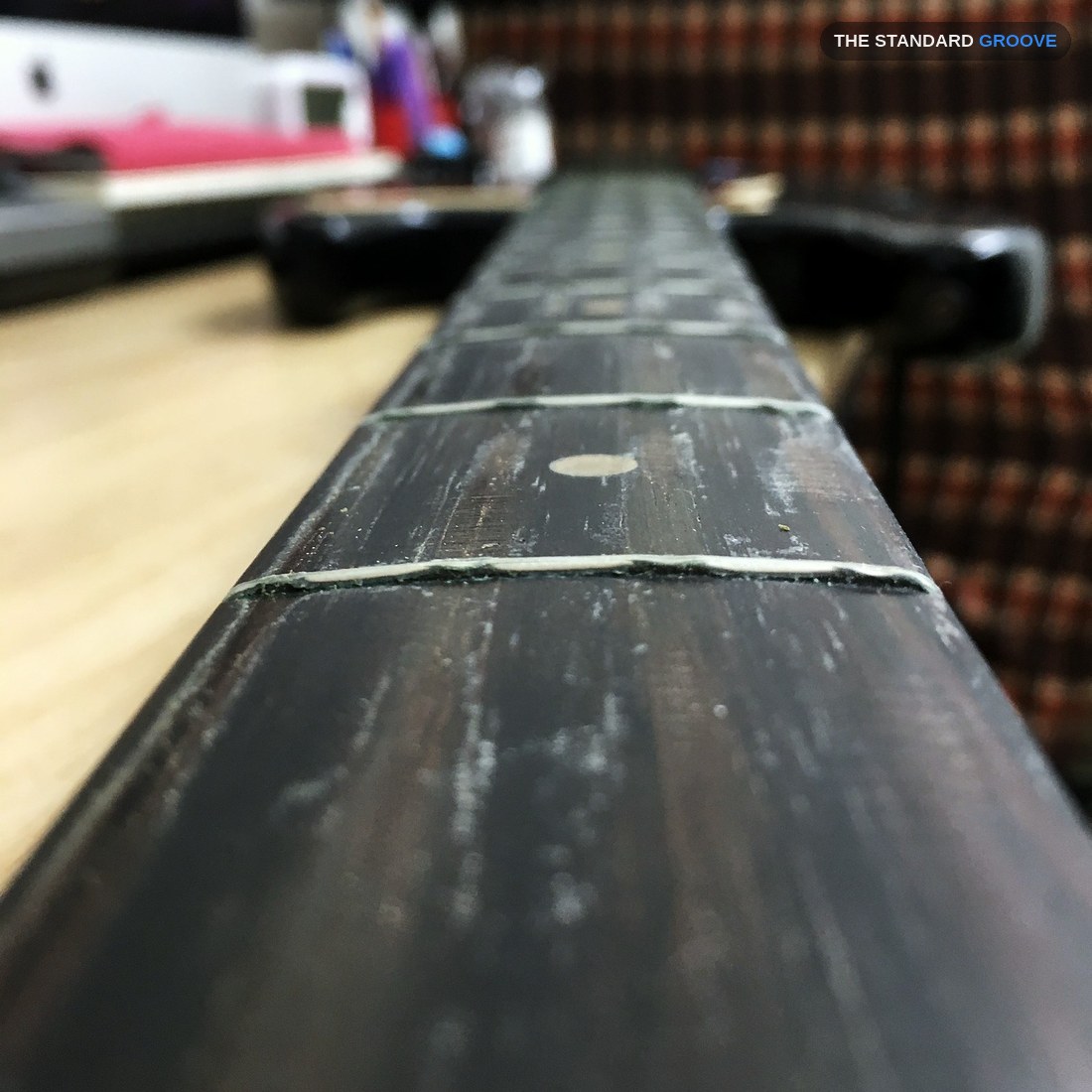
The first bass I bought, in my third year of middle school, was a used one for 30,000 won. I chose it for one reason: I liked the color.
The strings sat so high that it was hard even to press them down, but I thought that was just how basses were, and I played it for months.
So there is one thing I would like anyone reading this to try today.
Think about what sound you want to make, and which bass looks most beautiful to you.
- 01 The bass that fits your hands
- 02 A place where it is always out
- 03 Where you are looking
Nils Landgren Funk Unit feat. Maceo Parker — "Simple Life (Live)"
Even after buying the Jaco signature, I took the Dame Jazz Special on stage for this song.
↑ 위 영상으로