THE TRIO
THREE
IS A ROOM.
The band inside
the name.
From John Mayer to Continuum, to the Trio’s formation, to Steve Jordan, to Try! — follow the room three players made, in order.
The name belongs to the guitarist, but the trio isn’t one person’s side project. Drummer Steve Jordan holds the time, guitar and vocals move on top of it, and the bass chair was often filled by Pino Palladino’s hand. This issue follows that lineup not as a fan list, but as an order of playing.
Mayer’s pop-chart years and his turn toward the blues, the sessions Jordan built up along with his history with Keith Richards and SNL, the stretch where Try! and Continuum overlap — published record and firsthand recollection are kept separate here.
The photos in this issue carry confirmed licenses from each photographer, credited honestly.
Five ways
into the room.
John Mayer
From Connecticut to Continuum
Continuum
The stretch where the tour moved inside the album
John Mayer Trio
Formation, anecdotes, and where the three of them stood
Steve Jordan
From SNL to the Stones, and the pocket
Try!
A portrait captured live, first
Practice — Three-Piece Blues. Like Early 2000s Blues Rock.
직접 연주하고, 무료 샘플로 연습해 보세요.
John Mayer
From chart songwriter to guitarist in a room — the Trio sits in the middle of that turn.
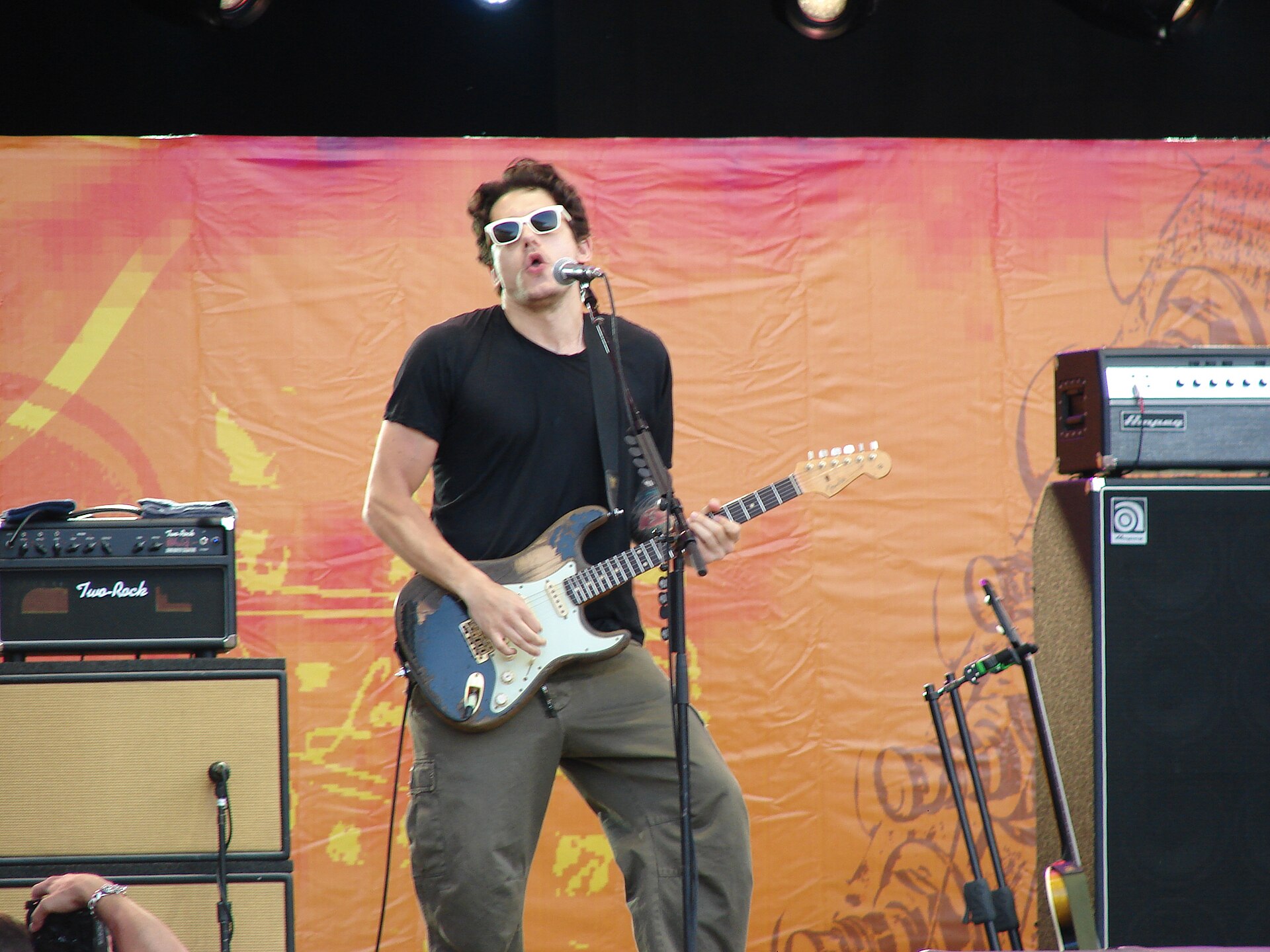
John Clayton Mayer was born October 16, 1977 in Bridgeport, Connecticut, and raised in Fairfield. Several biographies note his father was a high school principal and his mother an English teacher. He fell for the blues as a teenager, learned his hands on a Squier Strat, and guitar interviews repeatedly mention him collecting Stevie Ray Vaughan signature gear like a goal. The repertoire of his school bands, Another Roadside Attraction and Villanova Junction, leaned toward SRV-style covers.
He entered Berklee College of Music in 1997 and left after two semesters for Atlanta. He worked clubs with Clay Cook as Lo-Fi Masters before turning solo, then signed with Aware/Columbia via the 1999 EP Inside Wants Out and SXSW. "No Such Thing" and "Your Body Is a Wonderland" from Room for Squares (2001) put him in front of the public, and the latter won a Grammy for Best Male Pop Vocal Performance.
Heavier Things (2003) added a No. 1 on the Billboard album chart and further Grammys, including one for "Daughters." At the same time, Mayer began to feel the tension between his pop-facing image and his hunger as a guitarist. In a Rolling Stone interview he described the Trio as a choice inspired by Clapton, Hendrix, and SRV's own trio work, and said he wanted to step back from what he called the "invisible pop prize" — a comment left here as his own words.
He met drummer Steve Jordan during the Heavier Things sessions. Mayer has recalled that playing with Jordan made him a better player almost daily. That led to the John Mayer Trio with bassist Pino Palladino, the live album Try! (2005), and Continuum (2006), on which Jordan was deeply involved as producer. Continuum is tied to a Best Pop Vocal Album Grammy among others, and "Waiting on the World to Change," "Gravity," and "Slow Dancing in a Burning Room" remain the songs that define that era.
His taste has a clear axis: blues guitar language, soul and R&B groove, and pop melody, all held on one line. In a Mix interview he said Jordan drew out the immediacy of "playing in a room and having the mic catch it." The Trio is close to an experiment that fixed that immediacy into a stage format.
Replay "Gravity" from Continuum and you'll notice long stretches where the guitar refuses to hurry. That length isn't only technique. Jordan doesn't push the backbeat forward, and the low end — often Pino's chair — doesn't swallow the space, which means there's already a room where Mayer can choose not to add notes. The "next room" the Trio opened wasn't about becoming a guitar hero — it was closer to being handed a grid where he was allowed not to play.
IN HIS PLAYING.
Continuum
Continuum wears a solo name, but the time-feel the Trio opened up sits underneath it.
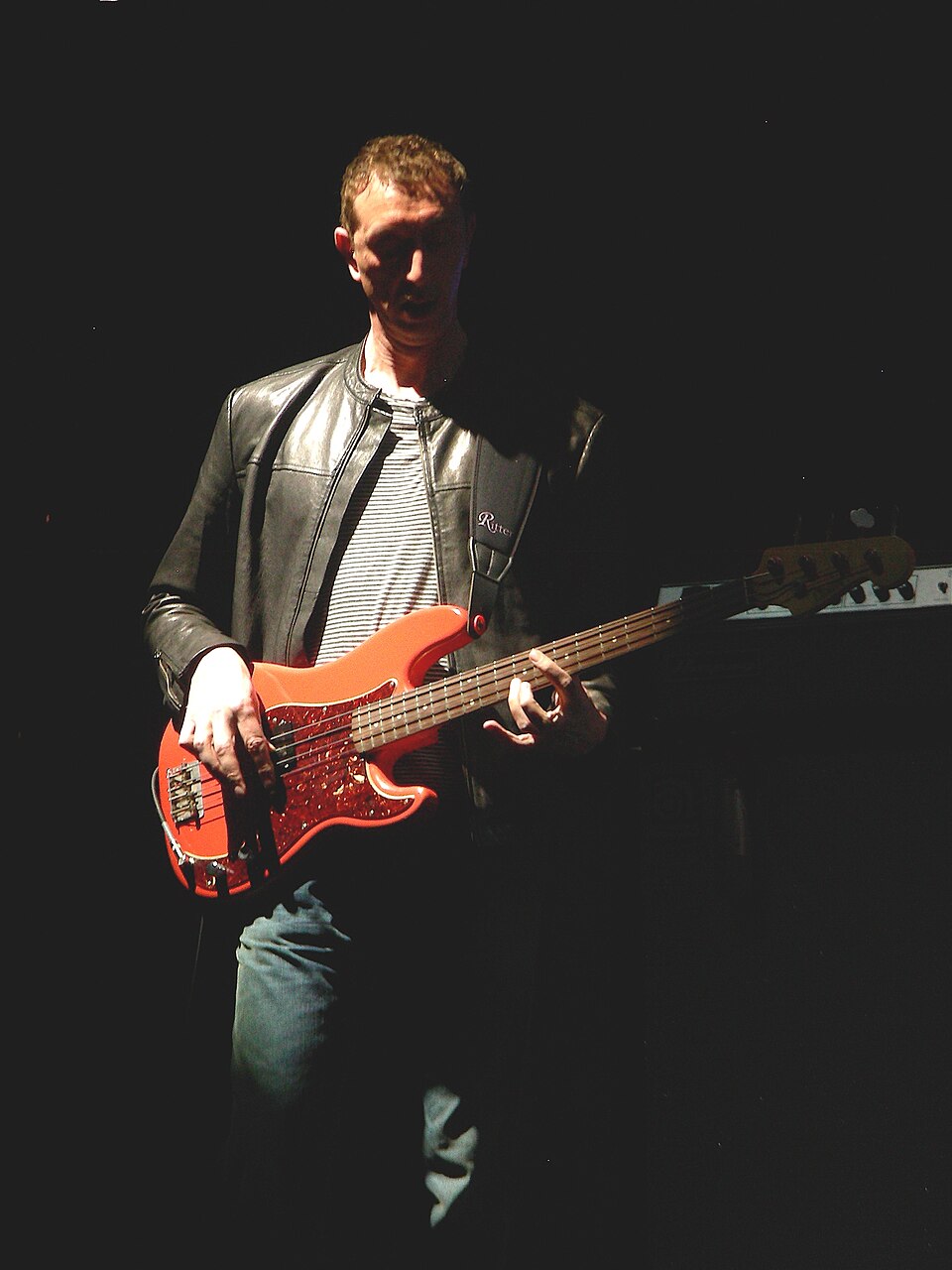
Continuum was released in September 2006. It's often read as the point where blues, soul, and pop align on one axis in Mayer's solo discography. Steve Jordan is deeply involved as a production credit, and Jordan's hand is in the rhythm section's skeleton. Pino Palladino plays bass along with other musicians depending on the track.
By some published accounts, several Continuum tracks were shaped first on the road during Trio tours. Songs like "Gravity" and "Vultures," which appear on both the live album and the studio record, show that path. Jordan has said in outlets like Inside Blackbird that the three of them already had "something," so they toured mid-album.
On the ride groove of "Waiting on the World to Change," Jordan has directly cited references like Maurice Jennings in later clinics. There are comments suggesting the hi-hat approach on "Vultures" was conscious of the Al Green / Willie Mitchell tradition. Since these are references he named himself, they're closer to choices than legend.
Mayer himself once described his collaboration with Jordan during the Continuum era as a combination of grit and pretty. If this record is covered only by the guitar-hero narrative, Jordan and Pino's place in it gets erased. It's more accurate to listen from the floor up.
Continuum (2006) credits
Mix — John Mayer
Drumeo / clinics — Jordan on specific grooves (first-person)
John Mayer Trio
Three is not a headcount. It's the process by which a room gets built — from how they formed to what happened onstage.
How they came together. Around 2005, Mayer stepped back from pop-chart competition and shifted weight toward blues and room-playing. According to Rolling Stone, the Trio was a choice inspired by Clapton, Hendrix, and SRV's own trio work. The drummer was Steve Jordan, who'd already found a rhythm with him on Heavier Things. The bass chair went to Pino Palladino, known for his work with the Who, Jeff Beck, and D'Angelo sessions. Records suggest rehearsal time wasn't long — the chemistry leaned more on immediacy in the room than on hours of rehearsal.
Before the three hands arrived. Mayer entered this room via solo hits and the coffeehouse and Atlanta scenes. Jordan is a drummer who passed through the SNL and Letterman broadcast bands, the Blues Brothers, Keith Richards's X-Pensive Winos, and countless sessions. Palladino's low-end résumé is layered with The Who tours, Phil Collins, Eric Clapton, and D'Angelo's Voodoo era. The Trio wasn't "a young guitar star plus a rookie rhythm section" — it's closer to the intersection of three hands already forged in their own rooms.
Overlapping schedules. After sensing the three of them had "something," the story from Jordan's side is that they toured as a trio while Continuum was still being made. That's why songs like "Gravity" and "Vultures" overlap between live and studio versions. Mayer has described the Trio as opening "the next room in his head." Jordan has explained the Trio's playing along the lines of: fewer people doesn't mean padding out the fills — the music comes first.
What was left behind. There's no official studio album by the trio. Instead, its portrait is made up of the live album Try! (2005), the groove that seeped into Continuum, later live documents like Where the Light Is (2008), and reunion stages such as the 2023 Love Rocks NYC. Not a finished product, but a room that reopens whenever it's needed — that image fits this trio.
Pino's name is already there in the credits and on the stage. We simply let the record and the anecdotes stand as they are, with one fact left in place: take away the third chair, and the room doesn't hold together.
NOT A HEADCOUNT.
Rolling Stone — Mayer on Trio formation
Mix / Jordan public comments on tour-during-Continuum
Try! (2005) album credits
Steve Jordan
Jordan's résumé doesn't reduce to one line of backbeat. Broadcast bands, Keith Richards, production credits — and the Mayer Trio.
Steve Jordan was born January 14, 1957 in New York. There are accounts of him taking the stage with Stevie Wonder's band as a teenager, and he passed through the Saturday Night Live band in the late 1970s and the Late Night with David Letterman band in the 1980s. He also toured and recorded with the Blues Brothers. His broadcast-band background didn't leave behind only "precision" — it's a large part of why he's still called on as a groove benchmark across rock and R&B sessions since.
His ties to the Rolling Stones and Keith Richards run deep. Richards's own recollections mention that Charlie Watts noticed Jordan on SNL, which led to work on Aretha Franklin's "Jumpin' Jack Flash" and co-writing and producing with X-Pensive Winos. On records like Talk Is Cheap, Jordan is closer to a partner than just a drummer. Since 2021 he's also stepped in as the Stones' touring drummer, filling the gap left by Watts.
His work with Mayer began on Heavier Things and deepened through the Trio and Continuum. As Continuum's producer he's tied to a Grammy for Best Pop Vocal Album, and he has explained specific groove references directly in clinics. On the Trio, he's maintained the view that fewer people in the room doesn't mean padding out the fills — the music comes first.
Take just "Waiting on the World to Change" from Continuum. In later clinics, Jordan broke down this song's ride pattern and said he was conscious of drawing on a particular drummer's tradition. What we hear first on the radio is Mayer's hook, but the floor that hook stands on is restraint without excess. On the same album's "Vultures," he also references the hi-hat tradition of Al Green / Willie Mitchell's rhythm section. This isn't a list of references — it's the habit of a producer-minded drummer choosing, song by song, which room's hand to borrow.
To name just the most-cited work: Mayer's Continuum and Trio, Richards/Winos, countless sessions (credited on some Alicia Keys and Springsteen work, among others), and the Stones touring years. Less a 'backbeat player' than a hand that designs time.
OTHER PEOPLE STAND ON.
Steve Jordan — overview
Rolling Stone — Jordan / Stones
Try!
The Trio’s first official portrait is a live album, not a studio LP.
Try! John Mayer Trio Live in Concert was released November 22, 2005. Three names on the credits: John Mayer, Steve Jordan, Pino Palladino. A mix of originals and covers in the Hendrix and Ray Charles vein, the set shows less the diligence of covering songs and more how three players leave space for each other in one room.
"Who Did You Think I Was," "Gravity," and "Vultures" build a bridge between this era's live grammar and Continuum. There's no need to hear the live album as an inferior copy of the studio work. The tension that remains when the room is tight and the mics are honest is closer to the Trio's identity.
Just the intro of "Who Did You Think I Was" is enough to see the Trio's room. The guitar seems to push forward first, but after one cycle around, the drums leave the space open instead of closing it. Pino's low end fills that open slot without covering the melody. There's no need to explain the whole of Try! from front to back. The first eight bars of one song already spell out the contract between the three seats — who pushes, who leaves space, and who holds the weight.
Later official live documents, including Where the Light Is, still carry trio sessions. The absence of a finished studio trio album is itself evidence that this format leans on the live room.
Try! John Mayer Trio Live in Concert (2005) — label credits
Rolling Stone / Mix on Trio period
THE TRIO
Mayer's name is the marquee, Jordan's time is the wall, and Pino's low end is the weight of the room.
Continuum is the record of that room seeping into the studio, and Try! is the record of that room written onstage first. We don't shrink this to a single hero. We follow the order that's left when three people watch the same clock.
BEFORE THE SOLO.
Music,
well considered.
THE STANDARD GROOVE makes music readable — and still worth returning to for people who have played a long time.